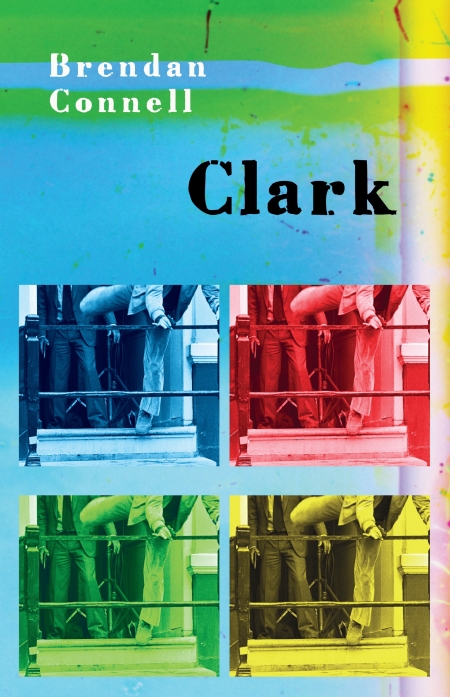
Last Drink Pre Order

September 25, 2009

Last Drink Bird Head, a neat anthology the proceeds of which go to ProLiteracy, is available for pre-order from Wyrm Publishing, at a 5 buck discount. Ann and Jeff Vandermeer are the editors, so you can be sure it is all quality stuff. Go here for details. 

To celebrate the occassion, I give an extract from my contribution:

Thick, soft, doughy muscles, body anointed with mustard paste; he was short with a sharp nose and hair on his back.

He wore neck-weights, did rigorous squats and plyometric press-ups and exercised with a thick length of bamboo to which a large stone was affixed. He ate pulses and fish seasoned with turmeric and drank chickpea water. 


Time is Memory, an Interview with Allan Graham

September 24, 2009

The following is an interview I did with Allan Graham, also known as Toadhouse, in 2003, for a Canadian magazine called Espace:

Allan Graham was born in 1943 in San Francisco, California and later moved to New Mexico, where he has lived for most of his adult life, exhibiting continuously at both galleries and museums, from Santa Fe, to New York, to Switzerland and Italy. His works are in several major collections, both private and public, noteworthy among them being that of the Villa Menafoglio Litta Panza, a public space created by the collector Panza de Biumo in Verese, Italy with the organisation FAI.

‘Non-conceptual.’ This is the first word that comes to my mind when confronted with the work of Graham. His art is not so much the art of the idea, as the art of what the idea indicates and what it cannot possibly say – visually or verbally. Whether it be the two bronze coffee mugs sitting alone in an empty room (TIDE: two ideas defining emptiness), the word-groups pasted as bumper stickers on vintage automobile bumpers (Toadhouse), or the wooden doors painted with a palette knife (Pre-hung: for those who suffer form), Graham consistently points to what is on the other side of thoughts and concepts.

‘Time is Memory’, last exhibited at SITE Santa Fe, in Santa Fe, New Mexico, is one of his most interesting pieces and consists of, in Graham’s own words, “16 death poems by 16 Zen Buddhist masters, 16 zafus (meditation cushions) and 16 reading lights connected to a central hub which is then connected to a solar electric computerised tracker. The poems, zafus and lights form an oval or circle on the floor with the solar electric tracker on the roof of the building. Weather, light shifts and human consciousness create a sensitive flux to the room’s events. Rising with the sun, flowing with the weather and then setting into darkness. The zafus are to be sat on, the poems are to be read and change to be experienced.”

The death poems used in the piece were composed by the various Zen masters just before they died, and are Graham’s renderings from various translations that he has read.

The following interview took place toward the end of January, 2003.

Brendan Connell. A lot of your work, and obviously ‘Time is Memory’ in particular, has what I view as a Zen Buddhist theme. Many contemporary artists use the same type of ‘minimalist’ aesthetics found in traditional Zen Buddhist art. But do you think, visually, a piece of artwork can have the same sort of affect as say, a Zen Koan, – an enlightenment effect?

Allan Graham. From a Zen standpoint art is only the pointing finger. Multiplicity, simultaneity and connections that become too vast for our logic or reason to hold onto have been my ‘focus’ for many years. That is my connection with Zen. But it also occurs in say, Sufi (Rumi), even in the most resent science – a beyond-self related comprehension. Physical details in art are just the language. I have no loyalty to a style or subject but there are reoccurring loops that feel like a part of me, whatever I do. Read the rest of this entry »


A few films . . .

September 13, 2009

Ninja Gari (aka Ninja Hunt or Ninja Hunters): This is probably the best ninja film I have seen, shot in beautiful black and white, with the ninjas depicted much more realistically than in other films. Basically, the story is about a group of ronin hired to defend a castle against a group of ninja who want to steal a certain document. Great stuff.

Bullet Train: This was the film that the Hollywood film “Speed” got its plot from. Bullet Train is about a thousand times better though, as the terrorists are depicted in a very realistic way, and the cinematography is far superior. There are a few silly bits, but by and large this is a worthwhile way to spend a couple of hours.

Italian Secret Service: A very funny comedy staring Nino Manfredi. Apparently there is a dubbed version available in Enlgish, which I would skip, but if this is ever made available with subtitles that one should see it. The original Italian is very funny.

Zombi Holocaust: This is a really awful cannibal film. I can say, having seen a great many of these sorts of things, that this one is probably about the worst. Everything about it is bad, from the music to the acting. The jungle the adventurers are travelling through looks an awful lot like a park or a backyard in Florida. The grass has actually been cut with a lawn-mower, even though it supposed to be some island in the middle of no-where inhabited by nothing but cannibals and zombies. One would have a hard time finding a legitimate excuse for watching such a film.

Le sette folgori di Assur: Another bad Italian film. We are placed in I guess what is supposed to be ancient Babylon and introduced to Zoroaster and a boring plot line involving Howard Duff and kings and romance and gods. Worth a miss.


Last Drink Bird Head

August 23, 2009

…is on its way.

A charity anthology for literacy, edited by Jeff and Ann Vandermeer.

TOC:

Daniel Abraham
Michael Arnzen
Steve Aylett
KJ Bishop
Michael Bishop
Desirina Boskovich
Keith Brooke
Jesse Bullington
Richard Butner
Catherine Cheek
Matthew Cheney
Michael Cisco
Gio Clairval
Alan M. Clark
Brendan Connell
Paul Di Filippo
Stephen R. Donaldson
Rikki Ducornet
Clare Dudman
Alistair Duncan
Scott Eagle
Brian Evenson
Eliot Fintushel
Jeffrey Ford
Richard Gehr
Felix Gilman
Jon Courtney Grimwood
Rhys Hughes
Paul Jessup
Antony Johnston
John Kaiine
Henry Kaiser
Caitlin R. Kiernan
Tessa Kum
Ellen Kushner
Jay Lake
Tanith Lee
Stina Leicht
Therese Littleton
Beth Adele Long
Dustin Long
Nick Mamatas
JM McDermott
Sarah Monette
Kari O’Connor
Ben Peek
Holly Phillips
Louis Phillips
Tim Pratt
Cat Rambo
Mark Rich
Bruce Holland Rogers
Nicholas Royle
G Eric Schaller
Ekaterina Sedia
Ramsey Shehadeh
Peter Straub
Victoria Strauss
Michael Swanwick
Mark Swartz
Alan Swirsky
Rachel Swirsky
Sonya Taaffe
Justin Taylor
Steve Rasnic Tem
Jeffrey Thomas
Scott Thomas
John Urbancik
Genevieve Valentine
Kim Westwood
Leslie What
Andrew Steiger White
Conrad Williams
Liz Williams
Neil Williamson
Caleb Wilson
Gene Wolfe
Jonathan Wood
Marly Youmans
Catherine Zeidler

<!– This entry was posted by Jeff VanderMeer on Wednesday, August 19, 2009 at 11:45 am and is filed under News. You can leave a response, or trackback from your own site.

–>


fffffiiiiilllmmmssss

August 22, 2009

Ragazzi del Juke-Box:  The Italian musical is a genre that has received very little attention. To my knowledge, not a single one of these films has ever been brought into English with subtitles. This one, made in 1959, is quite good, featuring a lot of footage of Adriano Celentano and subsidized by the very humorous Mario Carotenuto. The lead is played by Anthony Steffen, before he became a spaghetti western standard.

Juke box urli d’amore: This is a sort of “part 2” of the previous film. The story is totally different, but it also has Adriano Celentano and Mario Carotenuto. This one is actually superior to the previous, as the screenplay is very well done. The first film had Anthony Steffen before he turned to Spaghetti Westerns, and this one has Terence Hill before he gained fame in the same.

Hibotan bakuto: jingi tooshi masu (Red Peony Gambler 8): Being a big fan of Red Peony, I have to say I was disappointed in this entry. A lot of melodrama and not enough action.  

Il bandito dagli occhi azzurri: A pretty good Franco Nero heist film. Worth a watch.

Squadra antifurto: Another Nico Geraldi entry, starring the great Tomas Milian. Not the best in the series, but certainly with some laughs.

Madamigella di Maupin: Another Tomas Milian film. This is a historical piece based on the book by Gautier. Definitely watchable.

Pelle di Bandito: A great film about bandits in Sardinia by director Piero Livi. The cinematography is outstanding and there are some moments that really raise this one to world class cinema. The strange thing is that the same year this came out (1969), another film by Carlo Lizzani starring Terence Hill called Barbagia was issued, which has almost the exact same plot. One was clearly ripped off whole sale from the other, and I am inclined to think Lizzani was the one who took Piero Livi’s film and made a more popular version. In any case, Livi’s film is superior.


Famous Quote:

July 25, 2009

He shaved every day, and since boyhood had always used a poultice of moist bread to prevent the growth of his beard.

—Suetonius

Life of Otho


Wee Comments on Venice Biennale Pieces

July 24, 2009


This one by Miguel Barcelo could be good, though it is hard to tell from the photo. Large anyhow.

There just aren’t enough ways to say suck.  Artist Charles Ray seems to be looking for some kind of Greek purity here, but a naked boy with an inflated belly and a frog in his hand does not good art make.

Bruce Nauman is famous, but at least he deserves it. Mudras anyone?

Chinese artwork has been going downhill for the last 1,000 years, and Huang Yong Ping seems intent on making things stay that way.


Dead Souls update

July 19, 2009

A while back I posted that a story of mine was going to be in Dead Souls from Morrigan Books. My story was first accepted back in 2007. The editor wanted me to make some changes to the story (I thought for the worse). I made them. Then the editor I was working with was off the project and another came in. I think I might have made some more changes. Frankly I don’t remember. Anyhow: Lots of e-mails, “Let’s get excited! “Woo Woo”.

Frankly, I was not that excited:  I have lots of stuff published, and this for me was just another story.

Then a few weeks ago there was the final TOC. This is two years after my story was accepted.

The publisher said the book would be out in a week or two or some such thing.

I wasn’t holding my breath.

Then, a week later, I get news that my story and a few others the copy editor thought needed complete re-writes and the publisher agreed. Maybe I could rewrite it and maybe it could be in another book.

Or maybe not.

You just dont hold someone’s stuff for that long and then decide it needs major editing or a rewrite. You tell them that before you accept it.

The reason I am writing this is not out of anger. Frankly I don’t care that much. But I have seen a few folks searching my name in connection with this book, and I already publicly mentioned my story would be in the book, and it is best to let it be known about the way certain publishers operate.

As an ironic afternote, about a week ago I got a spam on my Facebook account urging me to buy the book.


fil-ms see-n

July 16, 2009

I ragazzi dell’Hully Gully: This is a film that is in Italian but go ahead and watch it if you don’t speak Italian. No subtitles needed as the film has about 10 lines of dialogue. The rest is music. Some good, some awful.

The Ghost Cat of Otama Pond: When I started watching this I kept wondering if I had already seen it without realising. No, I hadn’t. It is just so much like other Japanese ghost/ghost cat films of the early 60’s that it is hard to tell the difference. Some good stuff all the same though, with very dream like sets and the usual ghost cat agitations.

Brüno: Saw it, liked it.

Crystalbrain, l’uomo dal cervello di cristallo: This is a Spanish film that I saw dubbed into Italian. The original, and more appropriate title is Trasplante de un cerebro. For brain transplant enthusiasts only. It has  Frank Wolff in it, and when one thinks that he committed suicide only a year after making this film, a certain amount of sadness comes along with a viewing: seeing such a talented actor having to make a living by being in such a truly bad film.

Quest for the Mighty Sword:  This is the 4th film in the Ator series, though IMDB mistakenly says it is the third. Anyhow, all Ator films are bad, but this one is just miserable. That director Joe D’Amato managed to take time off of his busy schedule of making porn in order to indulge in these fantasy epics is not really a good thing.

Dieci italiani per un tedesco: A good but very heavy film. The story is about a group of partisans killing 32 nazi soldiers with a bomb. The Germans decide that 10 Italians need to die for every German.


An Extract…

July 3, 2009

This is an extract from a novel I am in the process of finishing up:

Bottles ranged on shelves against a mirrored wall barman working vigorously making coffee pouring drinks washing dishes / skinny pimp leans on the counter / man smoking a pipe reads a newspaper and Clark sat, the humiliation or anger or regret of what had happened with Susan still their, lingering, like a bad odour that followed him wherever he went and maybe the only way he could really wash it away was to throw himself into some new role, throw himself away and be recreated as something if not the opposite of what he had been at least with the quality of spirit that enables one to face difficulty and danger with firmness—not the difficulty and danger of being cheated on, because that had been almost a relief, but to face his own lack of renown with something resembling courage.